Saturday, 12 January 2013

My formidable foe and food cravings.

It has taken me a lifetime to realise fear is furtive and has many disguises and because of this, it's no wonder it is such a formidable foe.

Fear about your own ability can prevent you from doing your best work and fear about how your work is received can prevent you from doing your own work. 

What I'm also taking time to realise is that uncertainty is essential for creative work to emerge.

On to more lighthearted reflections. 

After eating 'fresh fruit' from local supermarkets this wintery morning in Scotland, I crave the oranges I ate every morning for 2 weeks in San Francisco; I crave the peaches I devoured in the Okanagan Valley in Canada; I crave the small Tenerife bananas. Ach well, the porridge was good and some Scottish smoked salmon is lined up for 'brunch'. 

Food cravings anyone? 

Sunday, 6 January 2013

'Blooming, buzzing confusion', switchtasking and 'sometimes reinforcements'.


Tomorrow I go back to work after a two week break and, as usual, I dread the thought of it and kind of look forward to it at the same time.

Like most people I love being on holiday. We live in a stunning location in rural Aberdeenshire. In 2012 we improved and modernised existing rooms in the steading (barn) attached to our cottage and this festive period has been even better with the luxury of the new living areas. I could quite happily work from this home!

As some of you know, I'm the Principal Teacher of History at a secondary school (12 - 18 year olds) and I get great satisfaction from teaching. I love my subject and the pupils make the job. They are often an inspiration to me. Yes, all of us in education face the continuous interference from politicians and so called 'experts' who force on us ever more 'new thinking' and 'new approaches' which can seem totally at odds with what your particular school and pupils actually need. But at the end of the day, it is a far preferable job to the one I did for 14 years in the oil industry.

So, returning to work brings things to look forward to and things that I could do without in my life.

But here's what gets me the most about the end of holidays - all the books and magazines not read; all the movies not watched; all the blogs and websites not read; all the walks not taken; all the photographs not taken; all the friends and relatives not visited; all the stuff still on my 'to do' list! Clearly I was unrealistic about what I could do during what is a busy holiday anyway. Worst still, there are so many distractions nowadays.

I'm currently reading The Pleasures of Reading in an Ages of Distraction by Alan Jacobs.  A few years ago I was trying to speed up my reading but Jacobs explains why you shouldn't if you really want to get more from what you're reading apart from just uploading information to our brains without giving time to consolidate and consider the information. Reading will always seem slow if all you want to do is pass your eyes over page after page and tick the book off as 'read'.

However, reading slower will mean I will get through less pages before I'm distracted by Facebook, twitter, Flickr, emails, cats, the scenery, the need to get outside! Technology has brought 'intermittent reinforcements' as B.F Skinner calls it, into my life and to rid myself of most of them, I'll have to alter my habits. It's this 'sometimes reinforcements' that causes the 'addiction' to keep checking social media. 

'The philosopher William James famously wrote of the "blooming, buzzing confusion" that constitutes sensuous experience for babies, who have not yet developed the filters necessary to organise that experience into discrete and meaningful units, but our daily technologies threaten to return us all to virtual babyhood"(my italics). [Jacobs, p.79]

Lately, I've been feeling this 'blooming and buzzing' has had an impact on my reading - not only the quantity but also the quality. My mind drifts much easier than it used to. This blog post is admitting my awareness of the 'condition' and how I want to do something to address the imbalance.

Essentially, I need to make it difficult if not impossible to go online for part of my day/week so I can get back to quality reading, studying, thinking and doing. Many years ago, I managed to stop smoking and drinking so surely I can do this? Jacobs talks about e-readers like Kindle which place emphasis on the text and 'hiding' the 'connect' command. ( I don't have a Kindle so can't comment on this.) So technology can be part of the solution, but I fear I may be too distracted still. I can't multitask, not because I'm a male; no, it's because none of us can, according to new research. Dave Crenshaw points out that genuine multitasking is impossible and a more accurate term is 'switchtasking'. We are really in a state of 'continuous partial attention'. Boy, does that describe perfectly how I felt much of the time in 2012!

At the moment, I'm still working on how to use social media and the internet to keep me informed, educate me, entertain me, promote me but not distract me so much. I will be 'experimenting' with possible solutions this year which may see me on Facebook and twitter a lot less but then again, ...

To be continued (and hopefully resolved).

Well done if you managed to read all this without getting distracted!

Wednesday, 2 January 2013

New music, new books and old but useful advice.


Some new music I bought in 2012:


Funny how so much of 'new' music sounds like old music to me. Must be a part of getting older. Interestingly, the older the musician the more contemporary the music, e.g. Karine Polwart, Richard Hawley and Lau.

Some books that held my attention in 2012:


I read others and went back to old favourites.

I've mentioned Art and Fear in a previous post. It describes some very familiar traits! It does provide some good advice and points to consider:

'What you need to know about the next (image) is contained in the last (image).'

'...ideas are diluted to what you imagine your audience can imagine, leading to work that is condescending, arrogant or both. Worse yet, you discard your own highest vision in the process.'

'...the world offers vastly more support to work it already understands - namely, art that's already been around for a generation...'

'..the real question about acceptance is not whether your work will be viewed as art, but whether your work will be viewed as your art.'

'....the audience is is seldom in a position to grant (or withhold) approval on the issue that really counts - namely, whether or not you're making progress in your work.'

'Outliers' by Malcolm Gladwell is worth a read. There are some gaping holes in some of the conclusions and analysis but it is thought provoking and helped to explain a few 'twists and turns' in my own life. I still need to work on my 'practical intelligence' I reckon! The chapter on why Asians are generally better at maths is very interesting. Also, the learning that goes on outside of school by students of more wealthy parents has more impact on attainment than I ever thought.

This morning, I was all ready to do a blog post about feelings just now and soon realised I can't better this and should move on.


Sunday, 25 November 2012

I think I've managed to stay on the bus.


Days are shorter and the harvest is in. Blogs are neglected.

How many blogs have you seen start a new post with apologies like: 'Can't believe I haven't posted anything for x weeks now!' or 'Sorry for not posting for so long', etc.?  Well, I'm not going to despite weeks having past since the last blog post. Why post something when you have nothing to say? In my case, I've just been letting myself mull over thoughts and trying to make some sense of them. Anyway...

I've been experimenting with titles for my images. Titles I find difficult. Some say you should let the viewer create their own association/story looking at the picture. I can agree with that but a title can help to hint at the atmosphere of a place.

When I visit abandoned communities and cottages, I genuinely feel that sense of isolation, hardship, abandonment and loss. As soon as I enter a property I can almost see the husband and wife going about their daily routines, trying to keep it all together against rising rents, falling prices and the growing lure of the big city or abroad. Standing at the bedroom or kitchen window I can quite easily imagine how they felt or what might have been going through their minds at various stages of their life.

So I started to give images titles which were essentially the thoughts I had at the time of the shot. The reaction was generally positive which surprised me a bit. Have a look at some of these images here, here and here. Not sure this approach has much mileage though.

Another change I'm working on is how I organise my images. Initially I organised them by location because it made sense and I believed (and still do) that many people search for images of abandoned places by the name of the property or area. That's fine. But at a Scottish Photographers' meet up in Dingwall, it was suggested I organise all the interior shots together and make a portfolio of them. So for the next meet I quickly (last minute everything!) gathered a set of interior shots of places all over Aberdeenshire. The effect of doing this was instant. I saw a theme, a story, a body of work I hadn't fully realised I was creating! Yes, I'm that dumb. In a book I'm working on, I can see me including thumbnails on a page which could have a whole set of fireplaces or windows on it for example.

With such straight forward and useful advice, my approach to my photography has moved on a bit. I just wish I could meet up with more photographers and artists on a more regular basis. Something to work on for 2013.

Conversations on twitter have helped me stay focused on what I want to do and not be swayed off course by being affected by lack of views, comments, likes, favourites etc. Thanks to Rob and Lucy I've stayed on the bus.

And finally some images of a fortunate find. To locate abandoned properties I tend to read local history books, tour the countryside on my bike or in my car and scour maps at home. Some I find by chance when looking for another place and this particular cottage I found that way but better than that, it had some of the best and weirdest graffiti and art work I've ever seen in a ruin.


If you're wondering about the post title read this


Friday, 17 August 2012

We all feel like this right?


Recently, I changed the title of this blog from 'James Dyas Davidson Photography' to just 'James Dyas Davidson'. The reason I did that was because I asked myself what was the purpose in keeping the blog?

Well, way back, this is was the answer. Essentially it was recording my return to photography. Looking back I think, 'Who would be interested in that?' and of course nobody was. It was good to get my thoughts on 'paper' though.

Reading photography books and blogs, you learn that embracing life and following YOUR passions could make you a more consistent and interesting photographer. Great. That led to this post.

So you go and shoot your 'passion' and soon find many others have the same passion and do it better than you. You need to find your 'voice'.

But you get distracted by requests to shoot the odd wedding, events, promos, etc. You try the odd competition. You try to emulate cool stuff you see in magazines and websites. Essentially, you don't shoot your passion and you don't get the praise and adulation you thought you might and you hit the ground with a bump.

You start to worry again about technical stuff, your workflow and your post processing skills because compared to others, you suck.

You go back to what kind of photographer are you? and that dreaded creative block hits. You need some inspiration and lo and behold, they tell me to shoot my passion and embrace life. Oh yeah, you lost that for a moment there.

Your off again on the right track for a while. It's beginning to all come together. Shame you can't do this full time perhaps? (At this point, for me, illness and time off work forced a rethink.)

Great, it's all sorted - you know what to photograph and why, you will remain a 'hobbyist' photographer and you're getting the hang of social media and websites. Positive feedback and comments begin to flow in you get some work requests. Oddly enough, not in the type of photography you shoot but hey ho.

Ah, but old habits die hard.

Time to learn the history of photography, learn about the past masters and to see what has been done and how you could add to that legacy in your own small way. (Many of my posts in 2011 were about the history of photography.)

Your blogs posts get closer to what you want your blog to be but again, 'life' happens to you and you have to deal with other stuff.

You meet or read about other photographers who 'say something in their work' and reflect their age. You want to too, but what are you saying? what is your world about? You ask around.

Your thoughts about what part do you want photography to play in your life is a recurring thought.

You start to get annoyed with yourself for going round in circles and always promising to not go back over old ground or to stand still. One step forward to your goals - always.

But good God! here you are blogging about losing focus again and how you're not going to again!!

You stall.

Then you listen to this and think, 'I am not alone. I am not a loser. Why don't more people talk about such things as fear, procrastination and self doubt?'

After all, don't we all feel like this?

So this blog is really about me, my struggles and what interests me, not just photography. Hence the name change.


Tuesday, 17 July 2012

The Pattern is Predictable.

I stalled.

"The pattern is predictable: as you see error in what you have done, you steer your work towards what you imagine you can do perfectly. You cling ever more tightly to what you already know you can do - away from risk and exploration, and possibly further from the work of your heart. You find reasons to procrastinate, since to not work is to not make mistakes. Believing that artwork should be perfect, you gradually become convinced that you cannot make such work. (You are correct.) Sooner or later, since you cannot do what you are trying to do, you quit. And in one of those perverse little ironies of life, only the pattern itself achieves perfection - a perfect death spiral: you misdirect your work; you stall; you quit."  From Art & Fear by David Bayles and Ted Orland.

But I haven't quit. Far from it. I can see now that the imperfections of my previous images are the seeds to my next attempts at creating images.

Tuesday, 21 February 2012

The Nike slogan and Lent.


A wee story about myself:

At school, I did better in the Humanities subjects and art but was ‘persuaded’ to follow a science path because ‘there would be a better chance of getting a job’, which in reality was true. In my late twenties I had a bit of an early 'mid-life crisis '. I knew I was in the wrong profession and needed to get out of the oil industry, despite the good money I was earning. I did OK in the job I was in and became qualified in electronic engineering and applied physics but the company owned me and I was unhappy.  

There was a ‘creative urge’ inside me that was being ignored. So I turned to self help books to see how I could move from one career to another. The good thing about reading these self help books, which many people mock, was I started to study with the Open University and gained my Honours Arts degree and got out of the oil industry, did a Post Grad Teaching course and eventually got into teaching. 
I became a Principal Teacher and settled into that position, a job I love doing. But I realised I still wasn't satisfying the creative spark inside me that had been snuffed out by guidance teachers and adults who said art was a waste of time and something you can do when you retire. After a Diane Arbus exhibition in Barcelona a few years back, I decided there and then that photography would come back into my life.
The point I’m making here is I became a bit of a self help expert and came to the conclusion that 'Just Do It' is probably one of the best pieces of advice you can give anyone. Stop thinking and start doing - have no worries or fears. Making a complete mess of things was OK as long as you learned from it and progressed. I try to overcome that fear of failure by failing and the only way I can fail and improve is to just get on and try it. Each time I learn from my actions and efforts, my self confidence and self esteem increases (well, most of the time!). 

I still struggle with this approach in some areas of my life, for example doing some DIY around the house like plumbing or car maintenance because the consequences can be a bit messy and costly to put right! However, for Lent 2012, I thought I would try hard to think less and do more. (I'm trying hard not to think about what a bad idea this is because I will probably fail!!) Wish me luck. 


(Above is a picture I took of the Peel of Lumphanan last weekend. The Peel is difficult to photograph because it is hard to isolate the Peel from the surrounding countryside. I thought I had it when I saw the dusting of snow on it and none elsewhere. Sadly, I didn't quite execute this shot as well as I could have - a bit of a failed shot but I know why and learned from it.)


Sunday, 19 February 2012

When the teacher 'gets' his own lesson!


Last week I was teaching a Religious Education lesson (that’s another story) about worship. To get the pupils thinking, I drew a flower growing from its roots underneath. I asked them to think about their hobbies or what they are passionate about. Then I got them to think of all the outward signs of their hobby, e.g. photography would be a camera, a bag, going to places of interest, taking pictures, processing pictures, printing pictures,etc. and place these around the flower. Next, I got them to consider the more ‘inward’ signs of participating in their passion, e.g. happiness, relaxation, self-confidence, de-stressed, at peace, excited, etc. These were placed around the roots. 
The pupils got it immediately - they could see how one feeds the other. If they couldn’t do their hobby then they felt unhappy, frustrated and stressed. Likewise, if they were unhappy or stressed or lacking in self esteem, then they tended not to perform their hobby very well. 
It was one of those lessons when I felt we were all having a wee ‘light bulb’ moment, myself included!


(The above picture was just a snapshot taken with the wee Canon Ixus 70 camera whilst I was out for a morning stroll. )

Friday, 6 January 2012

Creativity: Permission to fail sir?


"The D4 is announced. I am convinced more than ever that my photography will improve in 2012 by investing in me and my passions than in gear."

I tweeted this today. It was, as they say, a wee 'light bulb moment'. Let me explain why.

In my previous post I sorted out my top 10 'advice to myself'. The top 4 were:


Know who you are.
Embrace life. It helps creativity.
Always have art in your world.
Shoot what interests you, your passions. Find your voice.

These sentiments mirrored something I remember reading. It was Scott Bourne's free e-book 'Visions' and, as ever, the most obvious, common sense advice can sometimes resonate the most and Scott's words of wisdom kept coming back to mind.

He suggested that when it comes to creativity, most limits are self imposed. It can hamper growth.

Try new stuff and fail with a purpose. Give yourself permission to fail so you can learn from it and eventually move on to a new level of competence. Experiment, jam, brainstorm - just as musicians, artists and writers do, so why not in photography?

Make experimentation, expression, authenticity, storytelling and joy the measurements of your success. 


To tell a story in a picture I think you have to have a story to tell. You have to have an interest, a passion in what you're photographing. You need to know and understand why you're making the image. You must avoid trying to be 'new' or taking a shot to please others. You have to be you.  It is therefore important to know who you are. What moves you, what angers you, what saddens you. Be engaged with life, embrace it and be a person you would like to know.

You may be thinking, "I know all this already"- well, so do I, but in 2011 I felt I didn't stay true to this due to distractions like gear, social networking and other 'side-shows'. In 2012, I'm going to try to make images that are authentic, tell a story and convey some passion.

Am I talking rubbish? Do you think differently and approach your photography in a different way? (I am, of course, excluding work done for clients which have a different set of criteria, often defined by the client.) Let me know your thoughts.


Tuesday, 3 January 2012

Taking My Advice: A ‘Top 10’


I started this photography blog in March 2009. The entries ended up being more sporadic than I intended. My excuse, as always, was ‘lack of time’. I’m a full time head of History at a secondary school, which is certainly no 9-5 job (or 9-4 as the dumb media portray), so it is usually a genuine excuse. I like being a teacher and will always give it my full attention. So how can I also satisfy the strong need I have at present to immerse myself in my photography much more than at present? 
One answer is to be more focussed on what it is I want to achieve with my photography. I have no time to go back over ground already covered. That said, I will go back to ground covered but with a clearer, more purposeful eye. I may in fact, keep going back to one place, to one spot this year. I now see that, as well as perfecting my technical skills that bit more, I can only move on creatively if I thoroughly explore my immediate environment, my homeland. That will entail, not only devouring more historical knowledge, but being more aware of the current economic, political and social situation. 
So, to start 2012 and to make sure I don’t keep going back over old ‘thinking’ any more, I have made a list of the advice and intentions I have already stated in my blog posts in an attempt to keep me moving forward as a photographer and a more creative person.
  1. Know who you are.
  2. Embrace life. It helps creativity.
  3. Always have art in your world.
  4. Shoot what interests you, your passions. Find your voice.
  5. Don’t be concerned about what others think of your work. 
  6. That said, engage in conversations with other photographers. Network.
  7. Always be learning. Get out of comfort zones.
  8. Remember why you got into photography in the first place.
  9. Keep on top of the ‘business’ side of things.
  10. Be disciplined about archiving your work.
I’ll leave the final words to Bruce Springsteen who said this in his late twenties:
“...as you get older, you can end up in a life in stasis, shackled by memories and hurt. Old habits die hard and patterns repeat themselves and you can unintentionally let past disappointments effect your present and it can be difficult to move forward.”


Saturday, 5 November 2011

Alex Boyd - Scottish artist and photographer


(Photo of Alex above by © Carl Radford)
(All other photos © Alex Boyd)

I can't actually remember when and where I first came across Alex and his work. More than likely it was via his Flickr site where I saw his Sonnets series and I was impressed by what I saw. Very quickly, you sense Alex is friendly, helpful, knowledgable and passionate about art. He is an interesting guy, clearly talented, successful and doing a great job of getting his art seen. He his currently mastering the more fiddly and tactile aspect of photography - wet plate collodion.  I wanted to get to know him and his art better.
I did some homework and I could quickly see that he had been interviewed in the past and had explained and answered many of the questions I would have started with here. So, readers, once you have read the interview with Alex, go back and check out these other links.


JDD: Wet Plate Collodion – why the fascination and interest?
AB: I had been familiar with ambrotypes, glass plate negatives and tintypes for many years through my work in museums, but had never thought it possible to actually produce this kind of work myself, although I was aware of contemporary artists like Sally Mann who had been working extensively in this process in the US. 
It wasn't until I was asked to exhibit with the Scottish Photographers group alongside Carl Radford that I became aware that someone in Scotland was actively creating their own wet plate images. A few months later I had a chance meeting in Glencoe in the Highlands at the foot of Buachaille Etive Beag with Carl, and it led to us talking in more depth about wet plate, and he convinced me (without having to use too much persuasion) to become one of his students. During that weekend workshop I became convinced that this approach to photography was one which I wanted to pursue further - I had never become more emotionally invested in the creation of images before. Other than Daguerreotypes, I had never seen images which looked so visually arresting - wet plate portraits and landscapes have a tangible almost three dimensional quality to them.

Why do you want to make the process of photography more challenging?
I think that question is relative to the individual. As I've evolved as a photographer I've found that my methodology has taken on a slower, more considered approach. Instead of taking 300 images in one day, perhaps I'll make 3 or 4. I went from the sheer adrenaline of shooting gig photographs, to landscape photography, to very slow landscapes with long exposures, to collodion. It may change, but at the moment I'm largely uninterested in the quick fix of the digital image - I want the involvement that this process brings. For me making images any other way would be more challenging.

  
Why make photography less instant?
Wet plate collodion much like any other process is one which comes with strict limitations. It isn't just the cumbersome equipment itself which presents the biggest obstacle, or the chemicals, or the technical knowledge required to create images, but the whole reason of why I'm making an image in the first place. Collodion has really forced me to sit down and re-evaluate what I'm doing as an artist. Every image is therefore the end result of a rigorous cross examination process. I learned a lot from photographer and explorer Thomas Joshua Coopers approach to photography - he would travel to the most extreme edges of our planet with only a handful of glass plates, and this would force him to focus his mind on what he was trying to achieve. The downside however is that I'm not as prolific as I could otherwise be, but I'm happy to work at my own pace. 

What are you hoping for from the results?
Introspection and inspiration. I don't know if I will be working with wet plate in 10 years time, but for now it makes sense. Maybe when I look back on this period I will understand more about myself and my choices. That would be enlightening, as now I have no idea!

Are you not just being trendy?  Is it a fad?
The wet plate community has grown immeasurably in the last few years, which is no doubt why it may be perceived as being 'trendy' - due to the increased exposure it is receiving. This expansion has been in part due to the more widespread teaching of the process in Europe by people such as Quinn Jacobson, Kerik Kouklis or Carl Radford. It's also easier to get your hands on the chemicals required, but crucially it's access to the knowledge required to make your own images. For many years Collodion based photography was the preserve of a small group of wealthy middle class Americans, however in the last ten years all of that has changed as people have begun to share the secrets of their craft, and the price of workshops has dropped. At present I can't say if it's a fad or not, but I suspect not. It's very early in the rebirth of the medium and people for the most part are still finding their feet. As a result there are only a few established artists who are pushing the format forward in any meaningful way, but those who are will leave a long legacy.

I think wet plate collodion works best with portraits. You’re known for your landscapes. Can we expect to see more portraits from you in the future?
I've never really worked much in portraiture in the past so I don't really see why that would change now just because I'm using a different process. I would however agree with you that wet plate is ideally matched to portraiture due to its immediacy, and a survey of the modern community reveals that the majority are producing works of this type. When I was taught by Carl I too produced many portraits, however this was more to do with the workshop environment. To date I've largely eschewed portraiture altogether in favour of a return to landscape. That being said I have spent the last few months working on a project called Lux et Veritas which is based in portraiture - hopefully I can complete it in the coming year.

Does your recent wet plate work have any commercial potential?
It all depends on the viewer and the market I suppose, but it isn't something I'm particularly concerned with at present. My current project Low Lands is not as commercial as Sonnets, and it remains to be seen if the public or collectors will respond well to my new collodion work. My perception at present is that museum curators down to ordinary members of the public just can't get beyond the process itself to view wet plate collodion images objectively on their own merits. It's my hope that perhaps in a decade or so they will be able to view these images in a more considered way. 


Do you wish you had been born in another time in the past? If so, when?
It's probably quite obvious, but I'd love to have interacted with the luminaries of the Fin de siècle such as Wilde and Whistler, or have witnessed Weimar society first hand, I'd like to have lived through the first wave of photographers who struck out from the UK to photograph the world, such as John Thomson or Alexander Gardner. 

What part, if any, does your family background, your nationality and upbringing play in how your images turn out?
Growing up in Scotland I was acutely aware that my accent (which I'm still quizzed about on a near daily basis) and general worldview marked me out as slightly different. When I first moved to the UK I lived in several different places in the first few years, and found it hard to adapt to my surroundings when I finally did settle in Irvine on the Ayrshire coast. I generally rejected life on the west coast of Scotland and clung onto my German roots, becoming quiet and insular in the process. As a result of this I became fairly obsessed with ideas of self and identity, and my place in the world, and that has fed into anything that I've done subsequently. The Sonnets project is probably the most obvious example of this. I'm using a very clear motif from German art (the rückenfigur) to explore ideas of identity in some of the most well known landscapes in Scotland.

You appear to me to be someone with a clear and confident individual style and taste, not only in photography, but in music, film and literature as well. How did that go down with your contemporaries, at school say for example? Did you meet like-minded people at school/university? 
When I was younger I tended to be more introverted, and spent much of my free time reading anything I could get my hands on. Whilst at school I was aided by a rather brilliant librarian called Alison Sinclair who managed to acquire anything I wanted to read . From Goethe to Gogol I managed to develop my own interests in literature, and was aided by a supportive English Teacher called Anne McGowan who first introduced me to poet Edwin Morgan, and a Mr Fleming who introduced me to Kurt Vonnegut. These influences coupled with my time in the Art Department learning about the great American landscape photographers really did give me the foundation from which to begin to create my own work. In respects to my contemporaries I think there was a lot of indifference to anything other than the here and now, but that was to be expected given life in a little town on the West Coast of Scotland.  University of course was much different - it was good to meet people who had similar interests, but even better to find people who challenged my views and preconceptions. 

How important is it for photographers to be with other creative people?
I think it's important that there is a constant exchange of ideas between creative people, and for photographers to create work which reaches out beyond the usual role that photography fulfills. Most of my own projects have come from being inspired by literature, film and from visual artists - I don't really want to repeat the work of other photographers. 


You have exhibited in some high profile places; you have collaborated with some high profile people. How do you achieve that? What can other photographers start doing to market and promote themselves as successfully as you have done? 
Once I left home I lived pretty much hand to mouth for many years. Some of the places I lived in leaked badly, and some had walls which had gone black due to damp and mold. I was constantly ill. I wouldn't have money for anything other than the most basic food. Living in those kind of conditions can really push you hard to want to succeed, and as much of a cliche as it is to be a 'poor starving artist' it did give me the motivation to get out there and make images. I was lucky to have the support of my wife, my dad and my friends, who amongst them helped me to get out to locations, model, and even move and hang entire exhibitions. As for high profile names, I made a list of people I wanted to work with and wrote to many of them. Sometimes it worked out*, and sometimes nothing happened. I had nothing to lose. The important thing was having the ambition to get out there and believe in what I was doing. Nothing much has changed in that respect. 

What are your thoughts on the future of photography?
There will be an ever increasing demand for so called 'alternative' processes as photographers try desperately to mark themselves out as artists in the face of what they perceive as the soulless nature of digital. This misguided view, which I'm seeing becoming ever more prevalent, is producing a wave of increasingly dull imagery which hides behind the processes themselves. Beyond that I don't know - photography as a medium is generally losing its importance, but will always have the potential to communicate something vital to the viewer. That will keep it relevant I feel. 

What would be the best thing anyone could say about one of your photographs?
I think the best reaction for any artwork is to inspire others to create their own. Praise passes quickly and in the end doesn't really stay with me - I just wish I could say the same about negativity, but I'm just happy that people are engaging with what I do.

Is there a photograph you wished you had taken?
There are many, but the one which immediately comes to mind is an image by Harry Benson of Willy Brandt taken in 1961 when he was Mayor of West Berlin, a city in the heart of crisis. 

Its a deeply resonant image, and in it I see a man with the weight of the world on his shoulders. There is a similar feeling in his image of exiled Russian author Aleksandr Solzhenitsyn. Benson really was the master of capturing such moments. 

What question should I have asked you and what would your answer be?
Talisker Bay on Skye. That's where it all made sense.


I would like thank Alex for the time he took to answer these questions and for the quality of his answers. I hope you enjoyed this interview as much as I did. Feel free to comment and share. 

Saturday, 22 October 2011

Originality, Neil Young, increasing numbers and making money.

This is my last day here on Skye in the Highlands of Scotland. A place renowned for its dramatic scenery and beauty.

My wife and I rent a house and have done so for a few years now. I have a set of photos taken on these trips here.
Another thing Skye has is artists of all kinds. There is a very vibrant artist community here. I, naturally, tend to go and visit the photographers who nearly all take landscape shots. This year I have been struck by how similar these landscape shots look- you know, rocks in the immediate foreground, loch or river leading the eye to the mountains lit by either the setting or rising sun, perhaps with some snow. A wee white cottage or a lone dead tree the icing on the cake. Personally, I've yet to capture such a 'perfect' shot and I have no doubt that if I could see one and I was skillful enough to capture it as well as these photographers do, I would take such a shot. But why?
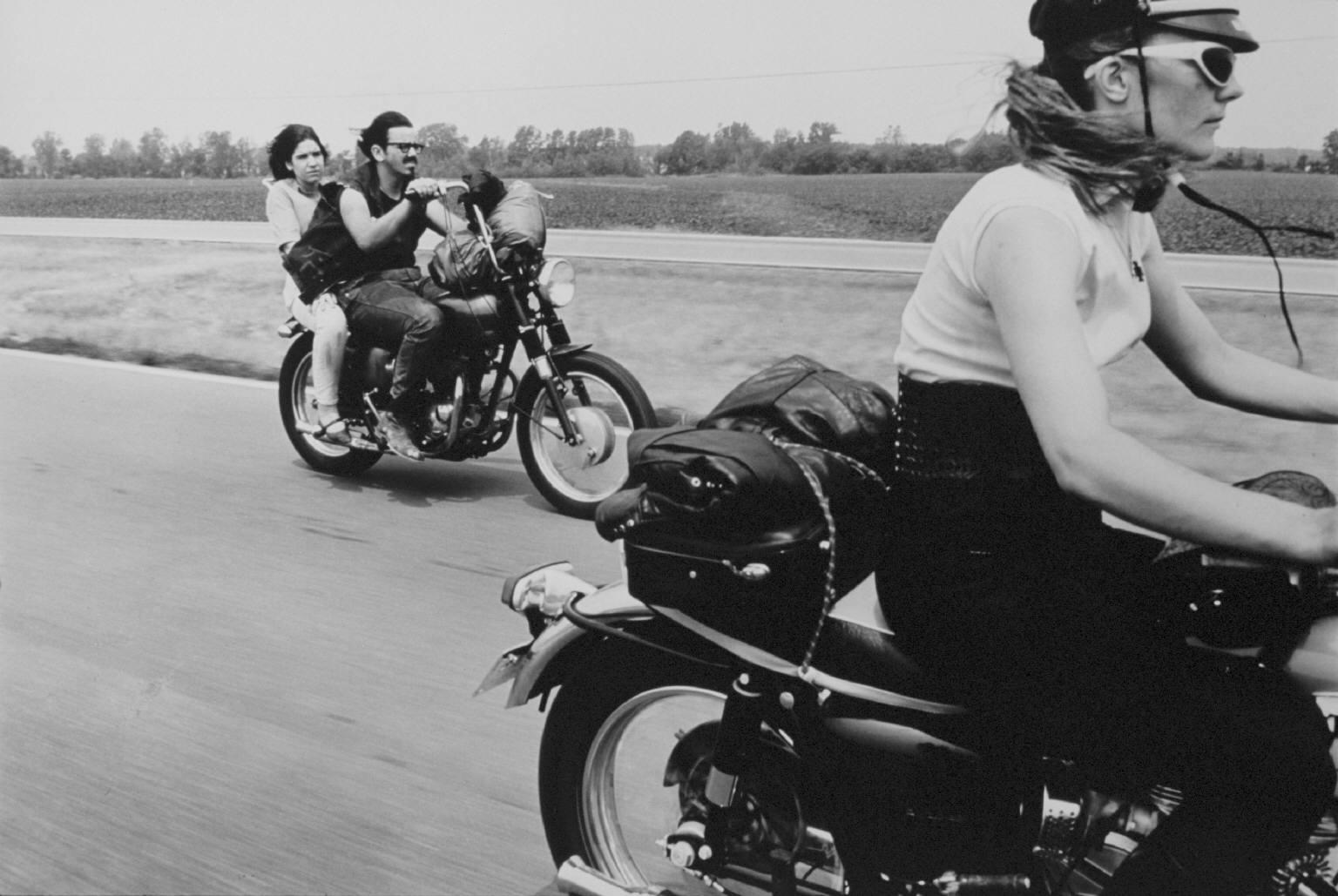
Just to see if I can. Just because it is recording the beauty of the island I visit so often. People buy such pictures. And why not?

Not very original though and in a crowded, networked and technically advanced environment, how do you stand out?

How can you be original these days when there are so many competent and enthusiastic photographers out there (and the numbers keep increasing!)? I was thinking about this last night whilst watching a BBC4 documentary on the great Neil Young who is well known for experimenting, for exploring new forms of musical expression, for putting the music first. Even though one musical 'formula' was highly profitable and popular, it was not to be repeated as far as Neil was concerned - often with disastrous consequences, losing sales and fans. Neil was not trying to make his music popular or interesting, he was making music that interested him, that stretched him, that advanced his craft and got him out of a comfort zone.

Neil isn't short of a bob or two, so having talent, being true to your craft, getting out of your comfort zone and working hard can be profitable, even if you lose fans and friends along the way.

Bland, unoriginal music also survives and makes money - and so does bland, unoriginal art.

Is this how photographers make enough money to live these days - produce the 'goods' that sell but try to be original in your free time in the hope that some people may love your original and personal work? Probably. But I also wonder if other employment is needed such as running courses, giving talks and, who knows, some other part time work.

I enjoyed David Fleet's blog post this morning on the viability of being a landscape photographer (you can read it here, as well as my comment). His post, as well as the Neil Young documentary, inspired this rambling entry today. I hope you followed my train of thought and what I was trying to say. I've said similar things here, here and here.

Please feel free to comment, especially if you are a full time photographer.

Thursday, 22 September 2011

Lucy Telford: Wet Plate Collodion enthusiast

I am a member of a local photography club and for the third year running we have come together and put on an exhibition as part of the annual NEOS extravaganza.  We had a preview evening and that night I stood, for a long time, in front of some pictures that oozed feeling and soul. They were by fellow club member and Flickr contact Lucy Telford. Some of the pictures were taken without a camera, some with modified shoe boxes, Diana cameras, old film cameras and, her current love, wet plate collodion.

Lucy recently went on a wet plate collodion course with Carl Radford where she was, not only in expert hands, but she met some great photographers, such as Alex Boyd and Deborah Parkin.
Lucy shared her knowledge and showed us the equipment she uses in a talk to the club last night and it was both interesting and informative without being boring or over her heads.
I recently asked Lucy if she would kindly answer some question I wanted to ask her and I'm delighted to  share this Q&A we did. Enjoy and check out her work. Thanks Lucy.


(JDD) Wet Plate Collodionwhy are you so interested in this?
(LT) During the last year I have been searching around for photographic processes or techniques which enable me to make visible the way I see things in my mind's eye.  I have “tried on” various different things – 35mm film, toy cameras, pinhole cameras etc etc.  I had already come across examples of wet plate work on Flickr (my contact Allan Barnes) and been very taken with the look of the images, they are somewhat dream-like and timeless.  The more wet plate images I looked at and the more I got to know about it, the more interested I became.  Plus, well – I just like old things ;-)

Do you want to make your images more challenging?  
I presume here you mean the end result?  Yes, maybe.  In a way.  But no more than I want to make any of my pictures challenging.  I am not very interested in images where what-you-see-is-what-you-get.  I prefer there to be an ambiguity.  I would hope that people might emotionally engage with my pictures and begin to interact and interpret.

Will using wet plate produce better results and/or more personal results?
I am hoping that the more I do it and the more competent I become, that it will be a process which I use frequently.  I believe that it is a technique which suits my way of seeing.  More personal?  Yes, maybe.  The process is slow (compared to digital) and so invites ideas of constructing photographs which is something I am thinking of for the next year.

Old Cameraswhy the fascination?
Well, for a number of reasons.  I actually think that old cameras are quite beautiful in themselves.  I like old stuff :-)  I am not mechanically minded, unfortunately, but there is a delight in the (relative) simplicity of these cameras.  They are made to be mended.  I also like the results I get from them!

Why make photography less instant?
Because I find that I work too quickly and don't engage my brain so much when I use a digital camera.  I prefer to slow down and think and I can do that more easily with a film camera which only gives me 36 or 12 exposures.  Nowadays, so much of life is fast-paced and instant and I'm not sure that's a good thing. 

Is this not just being trendy?  Is it a fad?
No.  I am not sure that I know what IS trendy in photographic circles!  For me it is about experimenting, trying different things out and seeing what suits.  I honestly struggle to get the results I want from a digital camera so I don't use them.  Maybe this says more about my incompetence with digital cameras...

When I see your images made without a camera, it seems to me that you want to create images that may be in your head so you may even move onto other 'tools'/mediums?
Yes.  :-)  You are clearly a mind reader James so you know the answer to this already ;-)
Photograms have been used for a long time now and I wanted to have a play around with the medium.  There is no rule which says that a camera has to be used to make a photograph.

Are all of the above more the a scientist in you coming out?
Err...no!  Although I have been surprised at finding how interesting old lenses etc are to me. 

Are you more interested in the mechanics of photography than creating art that expresses you and your feelings?
No, definitely not.  The mechanics of photography don't interest me much.  I am not entirely sure why the things happen as they do...I just accept it!  For me it is all about making images which express a mood / emotion. 

What is your background?  School successes/university/occupation – does it matter do you think?
I was only ever any good at arts/humanities subjects at school.  Science and maths were beyond me although I am now beginning to appreciate them.  I read English at Uni with philosophy which I absolutely loved.  Being able to spend 3 years reading books, dyeing my hair and going to the pub – what's not to like ;-)  As far as occupations go, well – I have had boring office jobs like most people.  I worked in sales for a publishing company before moving to Germany for a while and then, eventually, when we moved up here I became a recruitment consultant in Aberdeen.  I think that my love of literature does have an influence on my photography, I will often think of a quote or a book and that will sometimes spark off an idea.  I think, inevitably, our backgrounds and interests have an effect on the work we produce.  I like being outside and so consequently I tend to take a lot of photographs of the natural world, nature moves me more than buildings do and that is reflected in what I choose to photograph.

Who or What have influenced your Photography?
Other photographers.  Until I got going with a camera seriously a couple of years ago I didn't really know any photographers apart from the really famous ones but I set out to immerse myself in the work of others to see what can be achieved.  I am constantly discovering new (to me) photographers and that's really exciting.  There are many photographers I admire but the ones who have had some influence on what I do are probably Sally Mann, Susan Burnstine, Josef Sudek and some of the Pictorialist photographers.

Do you have any thoughts on the future of photography?
Well, it wouldn't surprise me if there were a digital backlash – film is still being used (and not just by me) and I think people are now discovering digital's limitations as well as its advantages.  Everyone is a photographer nowadays and it is easier and easier to make a decent image so photographers have to up their game.  I suspect, though, that as time goes on there will become a greater and greater divide with digital and computer technology veering off in one direction and simple homespun cameras going in the other.  Never the twain shall meet and may everyone be happy in what they do :-)

Does your work have any commercial potential?
Lol...not sure about this one!  Maybe.  I think the wet plate stuff could be a goer as far as portraits go.  There can be nothing more unique.  Some people might go for a lomo wedding shoot but it would be stressful shooting a wedding with simple film cameras – not being able to see what you've got until it is too late!  I can see the potential for doing large format or wet plate portrait work.

What are your feelings regarding digital and video?
I think that photography is about choosing the right tool for the right job.  I would use a digital camera to shoot a wedding, no question.  I can, in fact, use a digital camera – I know it is hard to believe ;-)  I like using my homemade lensbaby lens on a digital camera too. Video is a closed book to me.  Other than videoing my kids learning to crawl and walk etc I haven't done any so can't really comment. 

Is there a photograph you wish you had taken?
That's a difficult one.  Probably one of Sally Mann's photographs from her “Immediate Family” book.

Sunday, 11 September 2011

Does your photography reflect your passions or the world you live in or both?

Last Friday, I set up my photography exhibition as part of the NEOS 2011 exhibition alongside fellow photographers from Deeside Camera Club. There was a real eclectic mix of styles and range of subjects - a healthy, interesting selection.
I've heard it say that the pictures you take of subjects that interest you are nearly always better than trying to make interesting pictures. Abandoned communities in the area where I live interests me. These images are becoming my most viewed, most talked about and most lucrative aspect of my work.


Exhibiting alongside some of your peers can also let you see how your images come across to the viewer. I was emotionally taken by the work of Lucy Telford who uses old cameras, 'toy' cameras, homemade cameras or no camera at all. I loved them. It got me thinking. What do my and my fellow photographer's pictures say about the world today? Should they say anything about the world we live in? What if your interest say nothing about the world you live in? Does it matter?
Today is the 10th anniversary of 9/11. There is much reflection and consideration of the actions taken since then. Have photographers represented, recorded, reacted and reflected the last 10 years?

To help me answer that question, I listened to Jeff Curto's class on 'The Atomic Age and New Frontiers' which looked at the work of photographers and artists who worked in the changing world after the dropping of the atomic bomb and the post war world. This was a world of abstract expressionism, be-bop jazz, anti-communism, rock 'n' roll, beat generation poets, civil rights, the Korean War, the Vietnam War, the Cold War and growing mass media.
Having looked at some of the photographers in Jeff's talk, I personally think the images reflect the photographer's passions and interests that have been used, if that's the correct word, to reflect the times by others. Some photographers have documented their world, some have picked up on the mood of the times and others have used the technology and media of the time. It all adds up to a great and exciting body of work.

Take a look at this selection and ask - 'do they reflect those post WW2 changing times?'

Aaron Siskind:


Frederick Sommer: