Wednesday, 20 April 2011

Is photography still our window to the world?

I was listening to Jeff Curto's Spring '11 Class 5 on Photography as transport in the 19th Century and it made me think about how difficult it is for photographers nowadays to bring a new image of the world which we hadn't seen before, into our lives. Haven't we seen it all by now? Some of the amazing BBC/Discovery/National Geographic documentaries I've watched took to me places I never imagined existed. Some I have an urge to travel to and the means of transport is available to me (but, alas, maybe not the finance!). Some places I think we've seen too many times and they have lost their allure perhaps.

In the 19th century, technological and chemical advances made it possible to take camera equipment out to the great wildernesses, and demand for images of the unseen world made it viable to capture the 'new world' and all its wonders. Coinciding with this was the transport revolution which made it possible for people to travel further afield and perhaps start a new life. In such cases, it would be beneficial to 'see' the terrain, the landscape and just exactly what the 'wild west' looked like.  (Jeff's talk concentrated mostly on American examples.)

Oliver Wendell Holmes wrote about travelling all around the world sitting by you fireside and how marvelous it looked.

Carleton Watkins' images of Yosemite made it a place of wonder and beauty.

Eadweard Muybridge (yes, the guy who did the multiple images of movement) did some technically brilliant landscape shots too.


The American Civil War photographer Timothy O'Sullivan also did work for surveyors so his photographs were perhaps the least picturesque but he still recorded, with some style, the land as it was about to be 'opened up' via railways, etc.


Andrew J Russell helped document the trans continental railway construction in America which helped investment and exploration. His images often had people in them.


William H Jackson realised that for Americans, devoid of all the grand churches and man made monuments so prevalent in Europe,  the landscape had become their 'cathedrals'. 

So what part of the world can photographers bring into our lives today that we haven't already seen? Well, maybe that's the wrong question. A better question might be 'what can a photographer bring into our world that we should see? The consequence of travel, industrialisation, urbanisation and the rapid population growth perhaps.


Sunday, 27 March 2011

Portraits

I was listening to Jeff Curto's Spring 11 Class 4 podcast on portraits called 'Light and Likeness' in which he considers What makes a good portrait? Are they the same today as they were back in the mid 19th century? It certainly gave me some food for thought and provided some fine examples of portrait photography for me to consider. This blog entry is just some brief notes and links to the photographers.

Only the rich could have their portrait painted so when a relatively cheaper alternative became available, the photographic portrait became popular. Daguerrotypes were one of a kind so it was only natural to do portraits because the sitter would, not only have an image that would 'deny time' but they had something to show others. With advances in lenses and lights, exposure times were reduced, but the process was still a joint effort between photographer and subject.

A stunning example of the quality daguerrotypists, Southward and Hawes:

There was also post-mortem portraits done.

With the invention of the calotype, a Scottish duo, Hill and Adamson began to take more outdoor portraits.


Does era make a difference to portrait photography? Some examples to consider.

Julia Margaret Cameron (active 1864-75) was a wealthy woman who did her photography for herself so could be creative and do her own thing.

Paul Strand (1920s-'50s) did realistic, straight on shots and well posed groups.

 Yousuf Karsh had well oiled posed shots.

Arnold Newman (1950s-80s) typically shot the subject in their environment and isolated them within it.

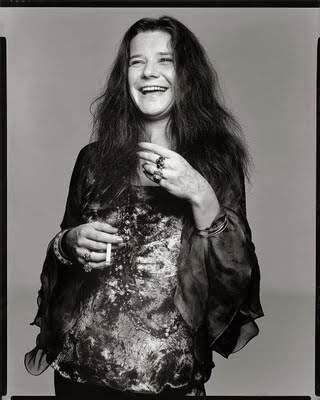
Irving Penn (1950s-90s) took people out of their environment. (I knew immediately knew who this portrait was of - do you?)

Richard Avedon (1950s-04) used a neutral background and people out of their environment.

A previous blog entry spoke about Robert Mapplethorpe, Cindy Sherman and Annie Leibovitz and their contribution to portrait photography, so I won't repeat myself here but move on to Alec Soth (2000- present)

Suzanne Opton (1990s - present) photographed soldiers in an original and thought provoking way and made very large prints for viewing in galleries.

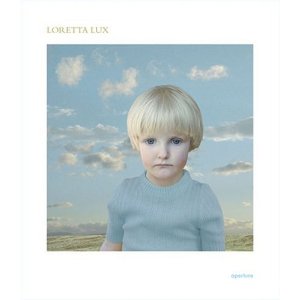
Lorettea Lux (1990s-present) took, what I consider slightly scary and surreal pictures of children,

And coming right back to where we began, a photographer who, amongst other things, takes daguerrotypes, Chuck Close (1960s-present.)

So what has changed regarding portrait photography? Well, certainly the technology has but as we can see in sites like Flickr, many are going back to old technology in a desperate search for originality? Or they may genuinely prefer the look and quality. There are more shots of people in their environment but also more elaborate staged and set up shots. The approach to the function of a portrait has altered as it has become so cheap and accessible to perform. Are they more disposable too, making them less valued? Has photoshop clouded the 'deny time' aim of portraiture too. Paparazzi and the cult of the celebrity has flooded our appetite for that.

One thing is for sure we all still love looking at portraits don't we?

Thursday, 3 March 2011

The best of the past with the inventiveness of the present in Photography

Ever thought of mixing realism with Zen spiritualism in your photography? Ever heard of Minor White?

How exciting was it, I wonder, to shoot the world of jazz and the American civil rights movement like Roy DeCarava? His portrait of John Coltrane, 1963:


Jerry Uelsmann's shots enter the surreal world, using multi-negatives and many enlargers to make an image in the darkroom. It is post-visualisation. Untitled 1969:


Olivia Parker's still life shots using various cameras :


Annie Leibovitz: documenting  and era's culture:


David Hockney: a painter using photography to explore perspective and how we see and look:


Cindy Sherman: self portraits, many like paintings or movie stills or magazine adverts:


Robert Mapplethorpe: documenting the gay community and producing exquisite still life shots.


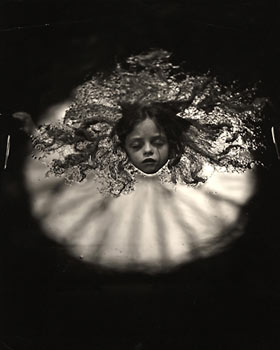
Sally Mann's old processes and equipment and family portraits:


Martina Lopez's stunning images of the past and the new by assembling old images with new processing:


Gregory Crewdson: staged and elaborate shots, visualised by him but executed by his assistants:


There it is. A quick visual run through of the last part of Jeff Curto's excellent History of Photography, Spring 11 Class 3 and the final part of my 'lecture notes'


Photography has come out of the centre of Daguerre and Talbot and spread out in all directions but mixed with each other on the way. 


Hope you enjoyed just looking at the pictures if nothing else! Some great artists here to explore in detail.


Monday, 28 February 2011

"Change Agents"

Part 2 of my lecture notes from Jeff Curto's History of Photography, podcast Spring 2011. 


Change agents can sometimes be people or it can sometimes be technology. 


In the 1920s, Andre Kertesz was using a new camera and lens, the Ermanox f/1.8. This allowed photographers to capture moments of real life as it happened. The wide aperture allowed for faster shutter speeds as well as shooting in dull light.


The idea of using a roll of 35mm film in a camera came from a perforated film used in a minigraph camera. A man called Oscar Barnack halved the size of the film, designed a camera at the company where he worked, Leitz Camera, to accommodate it and called it a Leica.


Then we get to Henri Cartier-Bresson and the Decisive Moment. 


The Lumiere Brothers came up with Autochrome at the turn of the century, the start of colour photography. In 1934, we see George Eastman making another appearance as a 'change agent' with his Kodachrome. This used subtractive colour using Cyan, Magenta and Yellow. Edward Steichen used Kodachrome in the 1930s. A great example of early colour fashion photography by Horst P Horst:


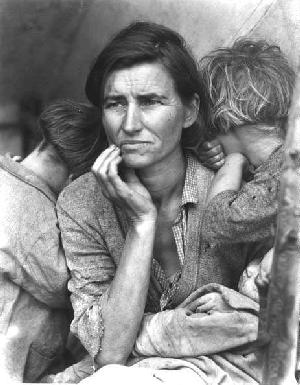
Back to photography with a social conscious now and the Farm Security Administration (FSA) with Dorothea Lange, Walker Evans and Arthur Rothstien. These photographs had a social impact, told a story and were works of art. 


Since the 1950s, 'change agents' have produced advances in technology, faster speeds, greater automation, digital photography and, more recently, video. 


Today, there really is no argument about whether or not photography is seen as a tool of commerce or art. It is both. A more current debate is regarding its commercial survival in the current free for all regarding the sale and use of images.


The next entry will look at fine examples of photographers who mixed ideas, styles, formats and technology.

Sunday, 27 February 2011

19th century 'photoshop' and what IS photography? Part 1

Just spent another enjoyable couple of hours listening to Jeff Curto's History of Photography podcast. This one was the second part of a two-part survey, a fast trip through the history of photography, attempting to get a handle on who did what, when they did it and how it happened. It starts in around 1880 and finishes up in the 1990s.
There were some iconic images which made it a very pleasant way to spend the late afternoon. Here is part 1 of my lecture notes so to speak:


Problems around 1880:

  • speed
  • size of prints
  • proper use?
  • colour (lack of)
  • spectral sensitivity
The biggest issue then was: what is photography?; what was it for?; Was it an art form?; should it try to look like a painting? Gustave Le Gray made a multiple print in 1865 to try to make his picture look more like a painting. Oscar Gustave Rejlander in 1837 made, what reminded me of images by David LaChapelle, pictures that looked like allegorical paintings, such as The Two Ways of Life, by using many negatives printed onto a large sheet of photographic paper. 
Another example of what could seen as 19th century 'photoshop' or manipulations - Henry Peach Robinson. 

Realism began replacing contrived shots with people like Peter Henry Emerson working in the 1880s.

Pictoralism remained though. An example of alterations to the chemicals used in the image process by Robert Demachy (1888) to simulate paint or scratches on the negative by Frank Eugene to give the impression of drawing.

Iconoclast Alfred Stieglitz (working 1880-1940) championed photography as an art form. His masterpiece 'Steerage' 1902.

The class then heard about the group called photo-secession. Edward Steichen, Gertrude Kasebier and Imogen Cunningham were sited as examples.
Gertrude Kasebier's portrait of Evelyn Nesbit:

Imogen Cunningham's 'arms'


The next part will have links for and examples of photographers with a social conscience, Group f/64, Bauhaus, Dada and Surrealism and 'change agents' that moved photography in different directions from its centre. 

Sunday, 20 February 2011

Photography - some History

This morning I've been catching up with Jeff Curto's excellent History of Photography podcasts.
This is what I picked up from it and maybe it would get you interested enough to go and listen to his podcasts.
(These notes I took whilst listening to his Class 2 Spring 11 podcast)

Artists grappled with how to convey perspective, motion and distance and space. An Arabian scholar was the first to record how a pin-hole image appeared around 900AD!
'Camera obscura' means 'room dark' ( from the Italian)
Artists like Van Eyck and Vermeer used the camera obscura to paint highly accurate and realistic images - including aspects of lenses, i.e. blur and depth of field. So they start to paint out of focus stuff. Interestingly, at the same time Asian art remains flat and lacking in realism because they were more interested in telling the story than getting perspective etc correct.

Niepce is seen as the person who produced the first photograph in 1827 using his bitumen coated metal plate process.
Daguerre worked with Niepce to come up with the process eventually to be called 'daguerreotype' which produced very sharp, very detailed, one of a kind plate images. Costly but became very popular as people wanted a portrait of themselves and family. So photography began in January 1839. One of the best and a famous daguerreotype is of abolitionist Frederick Douglass:

 Meanwhile in England Henry Fox-Talbot came up with his 'Calotype' process which involved light sensitive paper to make the negative placed on light sensitive paper to produce the positive image. This meant you could reproduce many prints but the image was fuzzy.

The 'wet plate collodian' process, invented by another Brit called Frederick Scott Archer, made sharper images that could be reproduced. However, you had to quickly expose and develop your plate so the photographer had to basically have a darkroom with him. Wet plate collodian images were printed on Albumen paper and the size of your print was the size of you plate. So if you wanted a large print, you had to have a large plate format camera. Landscape and travel photography becomes popular and most pictures from the period 1851-1880 would have been produced using this process. Carlton Watkins image of Yosemite (about 60years before Adams)
War photography also emerges, but the need for all the chemicals and speed for the developing meant the images are of AFTER the battles which makes them interesting narratives. Roger Fenton:

This inability to capture the excitement of battle caused some photographers to manipulate and set up scenes. Alexander Gardner's now infamous 'dead body moving' to create better images for example.

Sir John Herschel coined the phrases 'negative' 'positive' and 'photography'. He also came up with the chemical we call fixer.

Other people and topics touched on: Eadweard Muybridge; stereoscopic photography; cartes de visite; dry glass plates; George Eastman.

The wonderful Julia Margaret Camera was also discussed but she deserves a blog all of her own! An image of hers for now:

Well, there it is. Just some lecture notes really, so try Jeff's podcasts - they are very informative.

Friday, 11 February 2011

Diane Arbus

Today I went to the Diane Arbus exhibition at Aberdeen Art Gallery. This is the third time I've been to an exhibition of hers; the first was in Barcelona, the second in Edinburgh.

Her images, yet again, demanded my attention; they get my full attention. I'm drawn into them and quite stunned by them. They open up an America different from that normally portrayed. Many of her subjects were on the fringe of society. But she also captured familiar things and made them look strange e.g. the shot with the large Christmas tree in the corner. Some of the more exotic characters have very familiar items beside them; box of tissues, toilet paper, talc; etc. Some of the pictures are almost shocking in their purity and honesty but others have too much of their self hidden by masks or clothes or props. Her photos of nudists, drag queens, midgets, giants, suburban couples can be quite haunting.

Perhaps most haunting of all are her images from the institute of the mentally retarded (as it was called then.) As Nan Golden said about the shots of inmates taken outside, 


...often in masks and costumes for Halloween, or on picnics, or just frolicking on the grounds. Among these are some of Arbus, most beautiful and unforgettable photographs of all. The vision of a mentally disabled patient dressed as a ghost with a skeleton mask, or of a couple in a dunce, hat and clown suit holding hands on a wide lawn under a dark somber sky, looks like Grimm's fairy tales. The people become characters in a medievel theater or a Pirandello play. Somehow these pictures describe the experience of being institutionalized, not from a documentary viewpont but from the magical and symbolic realm where reality sometimes arrives. They bring round other poets of darkness like Goya, or Pasolini, or George Grosz.
...after the amazing photographs of a bizarre parade of patients in nightgowns and bonnets and fake mustaches leading one another across a dark field like the blind leading the blind, one still feels it's fair to assume that after this Arbus felt there was nowhere left to go. ( Quoted from here.)


Apart from being enthralled by the subject matter, I found myself trying to analyse her style some more. I wondered why she stood where she did to take a shot; why she included so much of the surroundings; why she came in so close; did she care that she was shooting this portrait in the mid-day sun?; did she not see that tree in the background sticking out of the boy's head?; why did she not care about cutting off their feet? I couldn't come to an 'Arbus approach' to a shoot. You had to have the empathy and internal pain of Arbus to shoot like, and think like her. She must have felt like an outsider, a freak, perhaps even mentally retarded herself at times, to see the world as she did. 


I wasn't disappointed by a third visit to a Diane Arbus exhibition. I could, and do, stare at her work for ages. They are narratives of, not only the subject matter, but of Arbus herself. Since her suicide in 1971, we seem to be searching in the photos for clues about her mental state, just like people do when a friend commits suicide. They go back over thing said, actions, hints, any clues at all that could have foreseen and perhaps, prevented the tragic event.


As I always do when I go to Aberdeen Art Gallery, I end my visit by looking at the four Francesca Woodman photographs they have. Another tragedy, another set of mesmerising photographs. 

Sunday, 23 January 2011

The sound of photography

In a moment of realisation, I tweeted this today "Beginning to realise there are more than three chords to photography, not to mention finger picking and different tunings. Genres too. Oh my" 


When I was about 16/17 I decided to teach myself the guitar. I sat for hours going from an E chord to an A chord and back again. I seemed to be disciplined and determined to learn how to play - and I did learn. I knew what kind of music I liked, therefore I tried to learn how to play like that. I jammed with a mate, Sye, who liked the same music. We got better. Sye got really good and still plays in bands today. I got to know all things guitar - makes, the differences and accessories. I studied past and present masters of blues and rock guitar - listening to their music and reading about them. Looking back learning seemed less 'cluttered'. No internet to lead you off in distracting directions! I realised today that I should maybe be taking this focused approach with my photography.

With photography, however, my tastes seem so eclectic. I love street photography, landscape photography, portraits, fashion and even some staged creations. Might it not be profitable to study and learn just one genre, like I did with the guitar? Yes, but how do I pursue street photography in rural Aberdeenshire? I suppose it is possible but logistically difficult. But the approach is sound I think.

I'm going to study, emulate and create from a genre/style/photographer. It will be one linked to my current ongoing project. If that genre of photography has only three chords to it and is played on an acoustic guitar with a plectrum and normal tuning, then I shall master that and then start to come up with my own tunes, in that genre. 

For some odd reason, thinking of photography as music has helped me today. Maybe it helped you. Maybe you do something similar with poetry or food or sport or whatever. Let me know.

Wednesday, 19 January 2011

Some thoughts on competition

I've been reading David duChemin's book Visionmongers and came upon, what I think is some sound advice for photographers regarding competition. He states:

'....I see competition as an intrinsically destructive force in a creative person. There is a sense in which competing pushes you harder, that comparing your work with others encourages you to hone your craft more aggressively or inspires you to move in different directions. But more often it pulls our focus from where it ought to be - on our vision, our work - and on to others.....You can't shoot for every market, you can't produce images in every style, and when you try to do so you create a moving target for potential clients who look, not for a jack-of-all-trades, but for someone whose vision and visual style matches what they're looking for.'

I still think looking at what other photographers do can inspire you do improve your craft and ultimately find your own style and vision (duChemin of course is not saying otherwise) and it can also boost sales and business in general, but the point he makes is so true. If you see another photographer selling more prints than you, how tempting is it to look at what people are buying and emulate it, taking your eye off the ball? I would be really annoyed if Neil Young started to copy rap artists to boost his sales. I want Neil Young to be Neil Young - in all his variations!


(Pic © James Dyas Davidson)

Tuesday, 18 January 2011

Think more, think less or let others think for you?

I recently watched the documentary on the making of Bruce Springsteen's album Darkness on the Edge of Town. I was moved by it in many ways. Bruce was only in his 20's when he made the record but his philosophy, work ethic and vision seemed to me to be so mature. He was trying to come to a reckoning with the adult world; dealing with a future life of limitations and compromise but finding the resilience and commitment to still embrace life. He also was considering what is sin in a good life and how do you carry that, deal with that? Thus, he wanted the album to be stripped down to its barest and austere elements with no distraction to the narrative.
When it came to deciding on getting the photograph for the album cover, Frank Stefanko was chosen. Frank had just moved into a new apartment so it had little furniture and old wallpaper on the walls from the previous blue collar working class family. Bruce just took a sample of his usual clothes and Frank took a few test shots.

© Frank Stefanko,

Of course Bruce chose those test shots as they were very stripped down, revealing and 'blue collar' - just what he wanted for the album. Fortuitous for Frank but what if he had found out more about Bruce's vision for the album? Would he have done something similar or entirely different and perhaps cliched? Who knows, but a good story and perhaps a lesson to photographers - show the client all your shots?

Back to Bruce; his maturity at such an early age stunned me. He seemed to see that as you get older, you can end up in a life in stasis, shackled by memories and hurt. Old habits die hard and patterns repeat themselves and you can unintentionally let past disappointments effect your present and it can be difficult to move forward.


I'm listening to that album with new ears whilst smiling at the cover shot by Frank Stefanko.